

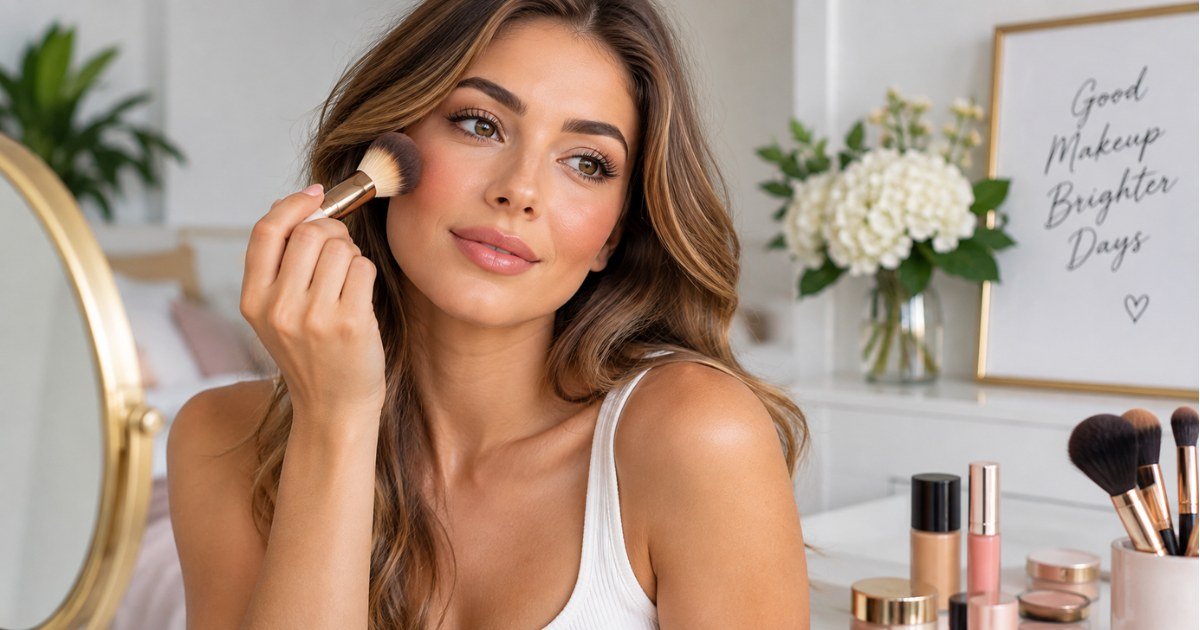
Makeup doesn’t always have to be bold, dramatic, or complicated.
A natural everyday makeup look is all about enhancing your features while keeping your skin looking fresh, healthy, and comfortable. It’s a great choice for work, school, casual outings, dates, travel, or simply feeling more confident in your everyday routine.
The best part? You don’t need a huge collection of products or advanced makeup skills to create it.
In this beginner-friendly guide, we’ll walk through a simple natural makeup routine step by step.
What Is a Natural Makeup Look?
A natural makeup look focuses on creating a polished appearance without making the makeup look heavy.
Instead of completely covering your natural complexion, the goal is to:
- Even out your skin tone
- Add a healthy-looking glow
- Define your eyes and brows
- Add subtle color to your cheeks
- Enhance your lips
- Keep everything looking fresh and effortless
Natural makeup doesn’t mean using no makeup. It means using makeup in a way that complements your natural features.
Step 1: Start With Skincare
Great makeup starts with well-prepared skin.
Before applying makeup, gently cleanse your face and follow with your usual skincare routine.
A simple preparation routine can include:
- Cleanser
- Moisturizer
- Sunscreen during the daytime
Allow your skincare products a little time to absorb before applying makeup.
Why Is Skincare Important?
Well-moisturized skin can provide a smoother surface for makeup and help prevent your foundation or concealer from looking dry or patchy.
Your skincare routine doesn’t need to be complicated. Consistency is usually more important than having dozens of products.
Step 2: Apply a Lightweight Base
For a natural everyday look, you don’t necessarily need full-coverage foundation.
Consider using:
- Tinted moisturizer
- BB cream
- Lightweight foundation
- Skin tint
Apply a small amount and build coverage only where you need it.
You can use your fingers, a makeup sponge, or a foundation brush depending on your preference.
Beginner Tip
Don’t try to completely hide every natural feature of your skin.
A little natural texture, freckles, or small imperfections can make your complexion look more realistic and fresh.
The goal is even-looking skin, not a completely artificial-looking surface.
Step 3: Use Concealer Where You Need It
Concealer can help add a little extra coverage to specific areas.
Common areas include:
- Under the eyes
- Around the nose
- Individual blemishes
- Areas of redness
- Dark spots
Instead of applying a thick layer everywhere, start with a small amount and blend it gently.
For an everyday look, targeted concealing often creates a more natural result than heavy overall coverage.
Step 4: Add a Touch of Blush
Blush can make a significant difference to a natural makeup look.
It adds color to the cheeks and can make your complexion appear more fresh and lively.
Popular choices include:
- Soft pink
- Peach
- Rose
- Nude
- Warm coral
Apply a small amount to the cheeks and blend it outward.
Cream or Powder Blush?
Both can work beautifully.
Cream blush can create a fresh, skin-like finish and is easy to blend with your fingers.
Powder blush is convenient and can work especially well if you prefer a more matte finish or have oilier skin.
If you’re a beginner, choose whichever formula feels easiest for you to control.
Step 5: Keep Your Brows Natural
Well-groomed eyebrows can frame your entire face.
For a natural look, avoid drawing a completely new brow shape.
Instead:
- Brush your brows upward.
- Fill in sparse areas lightly.
- Follow your natural brow shape.
- Blend any harsh lines.
- Set them with a brow gel if desired.
A brow pencil, powder, or tinted brow gel can all work.
The Key Rule
Small, light strokes usually look more natural than one heavy line.
Step 6: Create Simple, Defined Eyes
You don’t need complicated eyeshadow techniques for everyday makeup.
Start with a neutral shade close to your skin tone.
You can then add a slightly deeper shade to the crease or outer corner of the eye for subtle definition.
Good everyday colors include:
- Beige
- Soft brown
- Taupe
- Warm caramel
- Soft bronze
- Light peach
Blend the colors well so there are no obvious harsh edges.
Step 7: Add Mascara
Mascara is one of the easiest ways to make your eyes look more defined.
Start at the base of your lashes and gently move the wand toward the tips.
One or two coats are usually enough for an everyday look.
If you want an especially natural appearance, choose a mascara that emphasizes length and definition rather than extremely dramatic volume.
Don’t Forget the Lower Lashes
A small amount of mascara on the lower lashes can add definition, but it isn’t necessary.
If you’re going for an extremely subtle look, simply focus on the upper lashes.
Step 8: Add a Little Glow
A natural makeup look can benefit from a subtle amount of highlighter.
Apply a small amount to areas where light naturally hits your face, such as:
- Tops of the cheekbones
- Bridge of the nose
- Inner corners of the eyes
- Cupid’s bow
The key word is subtle.
You want your skin to look naturally luminous rather than covered in glitter.
You can also skip highlighter completely if your skin already has the finish you want.
Step 9: Finish With a Natural Lip Color
For everyday makeup, choose a lip color that complements your natural coloring.
Some easy options include:
- Nude lipstick
- Pink lip tint
- Peach gloss
- Rose lipstick
- Tinted lip balm
- Clear or lightly tinted gloss
Lip balm can be an excellent choice when you want the simplest possible routine.
For a more polished appearance, apply a natural-looking lipstick or lip tint and gently blend the edges.
Step 10: Set Your Makeup
If you want your makeup to last longer, finish with a setting spray or a light application of translucent powder.
If you have dry skin, avoid applying too much powder because it can make the skin appear less hydrated.
If you have oily skin, you can concentrate powder on areas where you typically experience shine, such as the forehead, nose, and chin.
The 10-Minute Natural Makeup Routine
If you’re short on time, you can simplify the entire routine.
1. Skincare
Moisturizer + sunscreen
2. Base
Skin tint or lightweight foundation
3. Concealer
Only where additional coverage is needed
4. Blush
A small amount on the cheeks
5. Brows
Brush and lightly define
6. Mascara
One or two coats
7. Lips
Tinted balm or natural lipstick
8. Optional
A little highlighter or setting spray
That’s it.
You can create a polished everyday look without spending 30–40 minutes in front of the mirror.
Common Beginner Makeup Mistakes
Applying Too Much Foundation
More foundation doesn’t necessarily mean better-looking skin.
Start with a thin layer and build coverage only where necessary.
Choosing the Wrong Shade
Your foundation should blend naturally into your complexion.
When testing a foundation, compare the shade against your jawline and consider how it looks in natural lighting.
Overdrawing Your Brows
Strong, heavily filled-in brows can make a natural makeup look appear less natural.
Use light strokes and follow your existing brow shape.
Using Too Much Powder
Powder can be useful for controlling shine, but excessive powder may emphasize dry areas and skin texture.
Use it strategically.
Forgetting to Blend
Blending is one of the most important makeup skills.
Whether you’re applying foundation, concealer, blush, eyeshadow, or contour, take a moment to soften the edges.
Following Every Trend
Not every makeup trend needs to become part of your routine.
Experiment with different techniques, but keep the products and styles that make you feel comfortable.
How to Make Your Makeup Look More Natural
If your makeup looks too heavy, try making a few simple changes:
Use less product.
Apply small amounts and build gradually.
Blend more.
Harsh edges can make makeup look obvious.
Choose colors close to your natural coloring.
Soft browns, peaches, pinks, and neutral shades are often easy starting points.
Let some skin show through.
Your skin doesn’t have to look completely covered.
Focus on balance.
If you emphasize your eyes, you can keep the lips subtle. If you choose a stronger lip color, you can keep the rest of your makeup minimal.
How to Build a Beginner Makeup Collection
You don’t need dozens of products to get started.
A basic collection could include:
- Moisturizer
- Sunscreen
- Skin tint or lightweight foundation
- Concealer
- Blush
- Brow pencil or gel
- Neutral eyeshadow
- Mascara
- Lip balm or lipstick
- Makeup brushes or sponge
- Setting spray or powder
Once you’re comfortable with these basics, you can experiment with products such as bronzer, eyeliner, highlighter, contour, and different eyeshadow colors.
Natural Makeup Is About Enhancing, Not Hiding
One of the biggest advantages of a natural makeup routine is its simplicity.
Instead of trying to completely change your appearance, you can use makeup to highlight the features you already have.
A little blush can bring warmth to your face.
A touch of mascara can define your eyes.
A subtle lip color can bring the entire look together.
And lightweight complexion products can help create an even, fresh-looking base while allowing your natural skin to remain visible.
Final Thoughts
Creating a natural everyday makeup look doesn’t require expensive products or advanced techniques.
Start with healthy-looking, well-prepared skin, use lightweight products, apply small amounts, and focus on blending.
Most importantly, give yourself time to experiment.
Your perfect everyday makeup routine may be completely different from someone else’s—and that’s exactly how it should be.